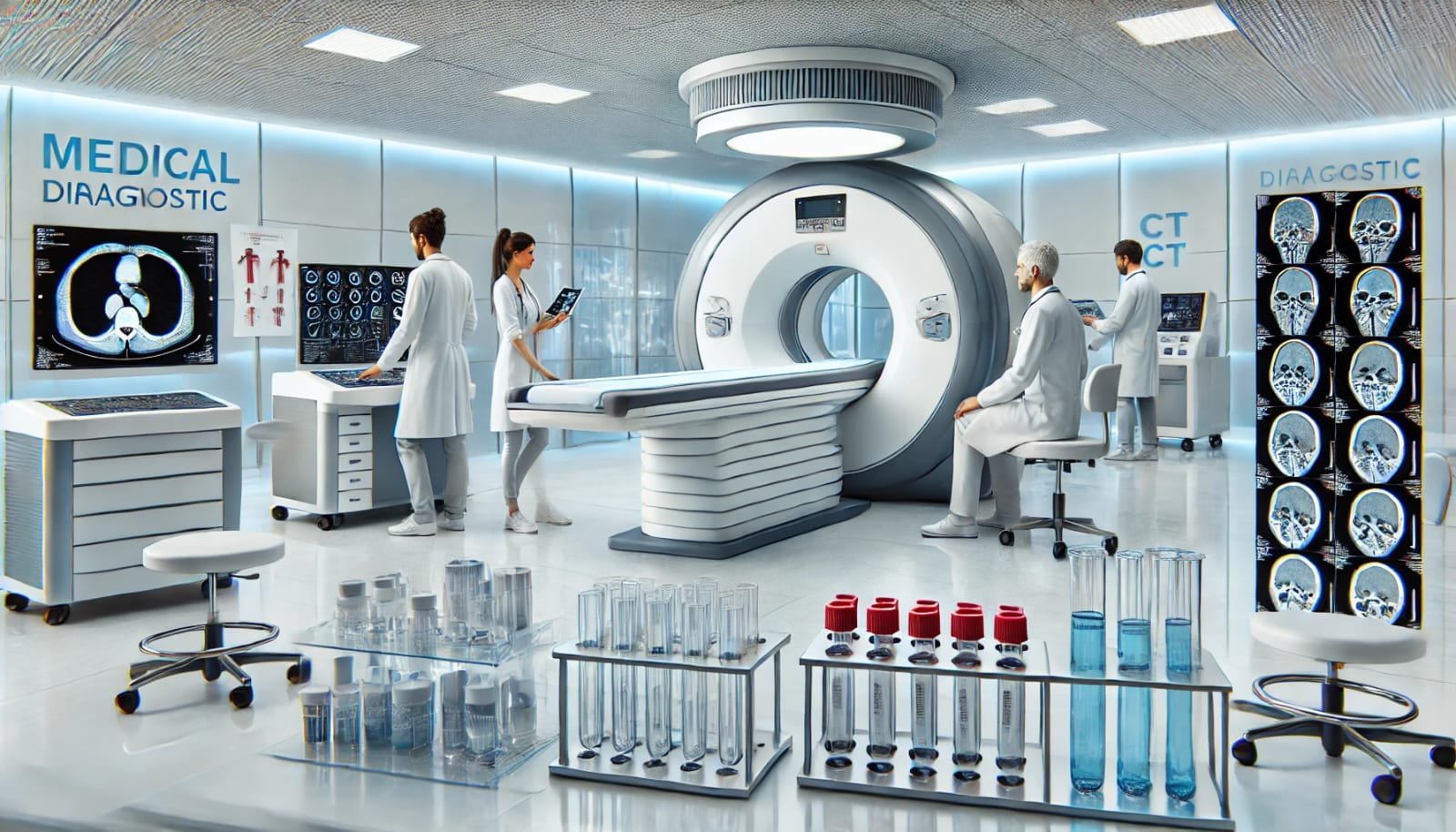
3T MRI (3 Tesla MRI): A Detailed Overview
A 3T MRI (3 Tesla MRI) is an advanced magnetic resonance imaging (MRI) scanner that operates at a higher magnetic field strength of 3 Tesla (T), making it twice as powerful as a standard 1.5T MRI. This increased power allows for clearer, more detailed images, faster scan times, and improved accuracy in diagnosing various medical conditions.
How 3T MRI Works
MRI uses magnetic fields and radio waves to generate high-resolution images of the body’s internal structures, including the brain, spine, joints, soft tissues, and organs. The Tesla (T) unit measures the strength of the magnetic field, with 3T MRI providing a stronger signal and higher image clarity than lower-field MRI machines.
During a 3T MRI scan:
- The patient lies on a movable table that slides into the MRI machine.
- The scanner’s powerful magnetic field aligns hydrogen atoms in the body, and radio waves create detailed images of tissues.
- The procedure takes 15 to 45 minutes, depending on the body part being examined.
- A contrast dye (gadolinium) may be used to enhance imaging for better visibility of abnormalities.
Benefits of 3T MRI
1. Higher Resolution & Clarity
- Provides sharper, high-definition images, improving the ability to detect small abnormalities.
- Ideal for brain, spine, musculoskeletal, and vascular imaging, where fine details are crucial.
2. Faster Scan Time
- Shorter scan duration compared to lower-strength MRI machines, reducing discomfort and motion artifacts.
- Beneficial for patients who have difficulty staying still during long scans.
3. Improved Diagnosis & Detection
- Enhances the detection of tumors, neurological disorders, joint injuries, and vascular diseases.
- Better visualization of soft tissues, helping in the diagnosis of ligament tears, cartilage damage, and nerve conditions.
Uses of 3T MRI
1. Brain & Neurological Imaging
- Detects brain tumors, strokes, multiple sclerosis (MS), epilepsy, and aneurysms.
- Provides clearer images of brain structures, improving diagnosis and treatment planning.
2. Spine & Musculoskeletal Imaging
- Helps diagnose herniated discs, spinal stenosis, arthritis, and ligament injuries.
- Used for evaluating sports injuries, joint problems, and post-surgical assessments.
3. Cardiac & Vascular Imaging
- Identifies heart diseases, blood vessel blockages, and congenital abnormalities.
- Used in MRI angiography (MRA) to assess blood flow and vascular conditions.
4. Abdominal & Pelvic Imaging
- Detects liver, kidney, pancreas, and uterine conditions.
- Useful for evaluating prostate and gynecological disorders.
Safety & Considerations
- Radiation-free, making it safe for repeated use.
- Not suitable for patients with metal implants, pacemakers, or claustrophobia.
- Stronger magnetic field may increase scan noise and require ear protection.
Conclusion
A 3T MRI offers exceptional image clarity, faster scanning, and improved diagnostic accuracy, making it the preferred choice for brain, spine, musculoskeletal, cardiac, and vascular imaging. Its advanced technology helps in early detection and precise treatment planning, enhancing overall patient care.

Reviews
There are no reviews yet.